
Can You Cut Trees on a Lake Norman Waterfront Lot? Buffers, Duke Energy and County Rules
Waterfront homeowners on Lake Norman must navigate strict Duke Energy shoreline management guidelines and county environmental buffers before cutting trees near the water. Here is what you need to know.
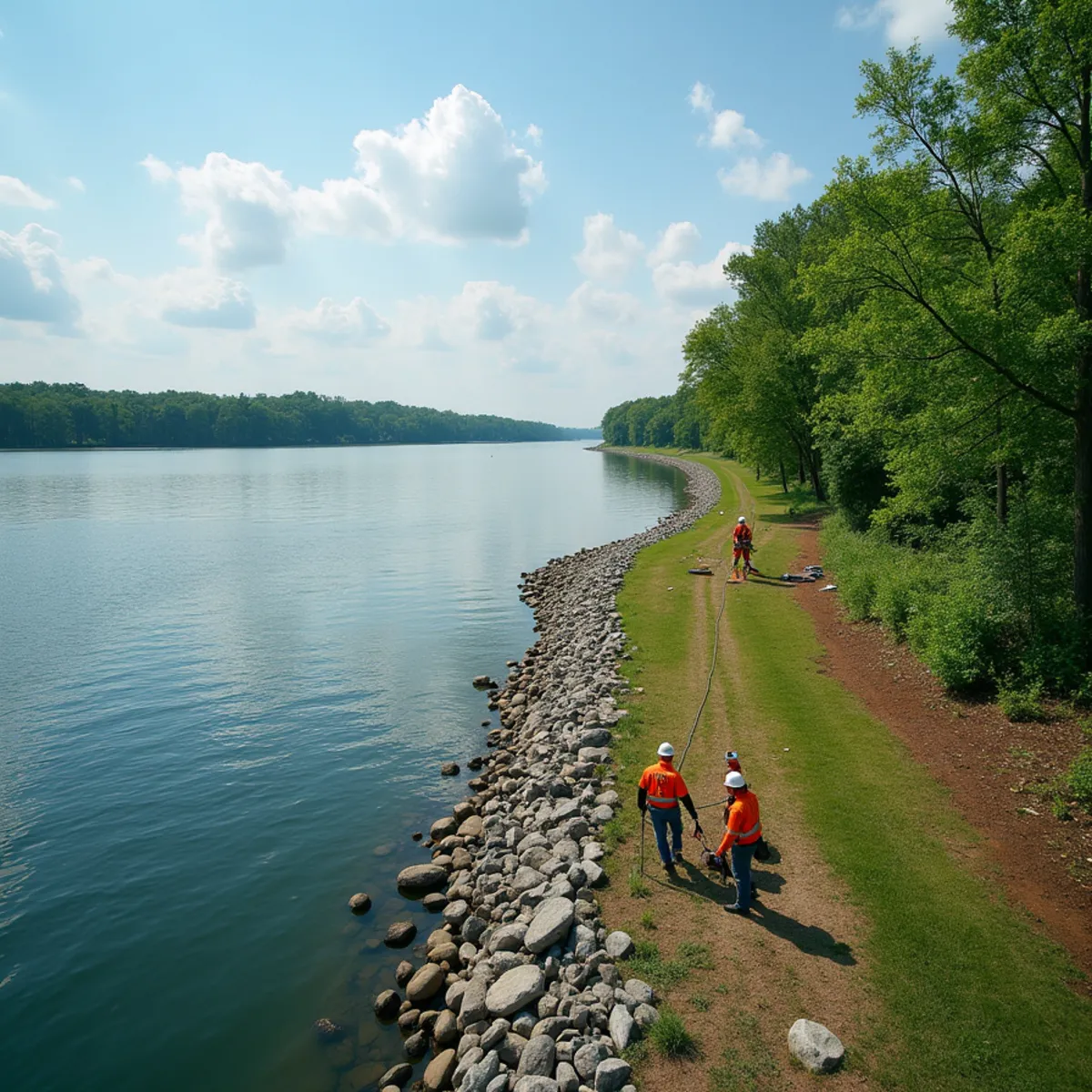
Understanding Duke Energy's Shoreline Management Plan (SMP)
Lake Norman was created between 1959 and 1964 by Duke Power (now Duke Energy) following the completion of Cowans Ford Dam. While homeowners own their residential parcels, Duke Energy holds property rights and flowage easements up to the 760-foot elevation contour above mean sea level, known as the full-pond contour. As part of its Federal Energy Regulatory Commission (FERC) license for the Catawba-Wateree Hydroelectric Project, Duke Energy is legally mandated to protect water quality, fish habitats, public recreation, and shoreline soil integrity.
Under Duke Energy's Shoreline Management Plan (SMP), the forested buffer strip bordering the lake is classified as environmentally sensitive. Clear-cutting shoreline hardwoods or stripping native dogwoods and understory shrubs to construct artificial sand beaches or open lawns is strictly prohibited. Violating these federal license covenants can trigger stop-work orders, steep financial penalties, and the immediate suspension of private boat dock permits.
The 50-Foot Vegetative Protection Buffer: Permitted vs. Prohibited Actions
In addition to Duke Energy's jurisdictional control below 760 feet, the surrounding counties—including Iredell, Mecklenburg, Catawba, and Lincoln—enforce watershed protection overlay districts that establish 30-foot to 50-foot vegetative buffers landward of the full-pond contour.
Within this critical riparian zone, maintenance activities are carefully regulated to balance homeowner aesthetic enjoyment with ecological preservation: • Permitted Activities: 1. Pruning lower limbs (crown raising) up to one-third of overall tree height to create scenic viewing corridors. 2. Window pruning: selectively removing secondary interior branches to create view 'windows' through the canopy without reducing overall tree height. 3. Hand-clearing invasive and non-native nuisance vegetation such as poison ivy, wild briars, and Chinese privet. 4. Removing dead, structurally cracked, or uprooting trees threatening docks, boathouses, or personal safety. • Prohibited Activities: 1. Clear-cutting or clear-stripping native shade trees and ground-stabilizing root mats. 2. Tree topping ('hat-racking'), which mutilates tree physiology and creates rapid structural decay. 3. Operating heavy bulldozers or track excavators directly along the shoreline bank, triggering severe silt runoff. 4. Chemical herbicide broadcasting directly adjacent to the water table without aquatic certifications.
Questions About Your Trees?
Speak directly with our local tree team. No automated robots.
Emergency Hazardous Trees Threatening Docks and Boathouses
Severe summer squalls and winter nor'easters frequently undermine mature trees rooted in saturated shoreline banks. When an 80-foot loblolly pine or water oak begins listing over a floating boat slip, $100,000 wakeboard boat, or private seawall, immediate action is necessary to avert catastrophic structural damage.
Duke Energy's Lake Services department permits the prompt removal of demonstrably hazardous trees, provided homeowners follow the proper protocol: 1. Photographic Proof: Capture timestamped photos showing the tree's defect (hollow trunk, fungal conks, or lifted root mound) and its proximity to the dock or structure. 2. Certified Arborist Assessment: Obtain a written hazard evaluation letter from an ISA-certified arborist or licensed tree professional documenting the structural failure risk. 3. Duke Energy Notification: Submit the hazard notification form to Duke Energy Lake Services before or immediately following emergency stabilization. 4. Low-Impact Extraction: Ensure the tree is dismantled in controlled sections using rigging ropes or mobile cranes positioned on driveways, preventing heavy machinery from rutting the shoreline slope. 5. Root Retention: Cut the stump flush with the soil rather than excavating the root ball, ensuring the decaying root mass continues anchoring the red clay bank.
Shoreline Bank Stabilization & Piedmont Red Clay Erosion Dynamics
The shoreline geology of Lake Norman consists primarily of Cecil series red clay and weathered saprolite. While dense when dry, saturated Carolina red clay loses structural shear strength rapidly under constant wave action generated by summer boat wakes and lake level fluctuations.
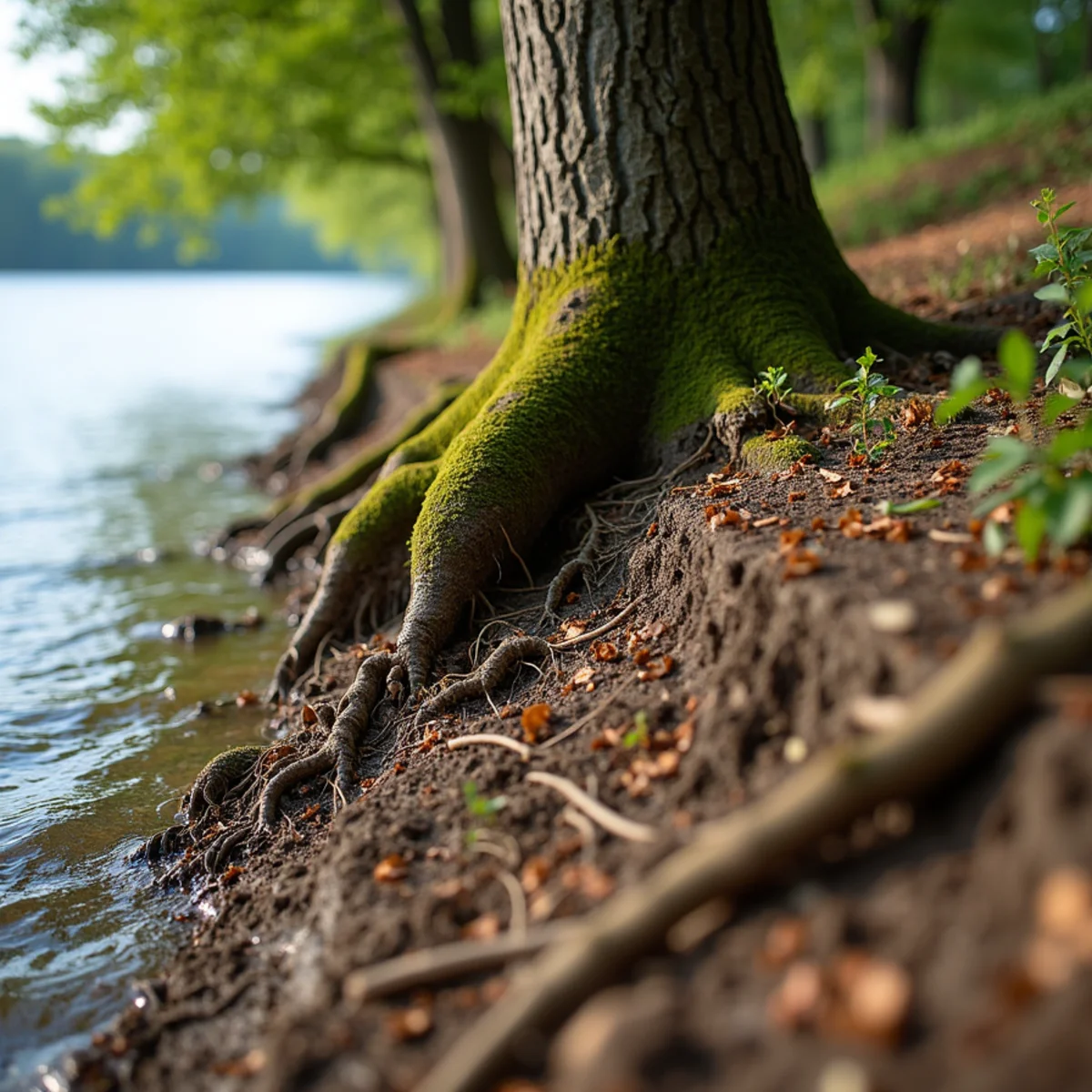
Mature hardwoods like white oak, sweetgum, and green ash develop sprawling lateral root networks extending 30 to 50 feet across the riparian zone. These roots act like structural rebar, binding thousands of tons of shoreline soil together. When a homeowner clear-cuts trees along the water's edge, those binding root fibers decompose within 2 to 4 years. The result is rapid bank sloughing, collapsed riprap, and severe property loss. Professional lake-view pruning preserves this living soil anchor while framing panoramic water views.
Working With an Insured Lake Norman Tree Specialist
Dismantling large waterfront timber requires technical precision far beyond standard suburban yard trimming. Dropping heavy limbs into Lake Norman water violates environmental protection covenants and risks puncturing underwater boat hulls or submerged electrical dock cables.
Race City Tree Crew utilizes specialized zero-impact rigging, friction-lowering winches, and all-terrain cranes that lift whole canopy sections up and away from the shoreline directly into our staging trucks on paved driveways. Every waterfront project complies 100% with Duke Energy Shoreline Management Plan regulations and local municipal buffer laws. Call our Mooresville headquarters at (321) 478-0689 for a complimentary waterfront consultation.
Frequently Asked Questions
What is the 760-foot contour line on Lake Norman?
The 760-foot elevation contour represents Lake Norman's full-pond elevation. Duke Energy exercises jurisdictional authority over all land below this line and enforces shoreline management regulations to protect water quality, fish habitats, and prevent shoreline erosion.
Can I remove a dead pine that might crush my boat dock?
Yes. Dead, structurally failing, or hazardous trees that pose an immediate risk to docks, boats, or human safety can be removed. However, Duke Energy Lake Services guidelines require prior notification, photographic documentation of the hazard, and leaving the subterranean root plate intact to maintain bank stabilization.
Can I trim lower tree branches to improve my lake view?
Yes, under Duke Energy guidelines and local zoning, selective 'view pruning' is permissible if you follow the 25% rule: you may elevate the lower branches up to one-third of the tree's height or remove select interior branches without topping the tree or removing more than 25% of the total green canopy in a single growing season.
What are the penalties for clear-cutting trees in the Lake Norman buffer?
Unauthorized tree clearing within Duke Energy's project boundary or municipal watershed protection buffers can result in severe civil fines reaching $5,000 per violation, mandatory replanting and restoration orders with mature nursery stock, and potential revocation of existing or pending private dock permits.
Can I grind a tree stump located directly along the water's edge?
Stump grinding within the immediate shoreline buffer is generally discouraged because subterranean grinding destroys the interlocking root web that binds the shoreline soil together. Duke Energy guidelines typically mandate cutting the tree flush with ground level and allowing the root structure to naturally decay while anchoring the shoreline bank.
Related Tree Services & Local Coverage:
Need Tree Service in Mooresville or Lake Norman?
Our local crews are ready 24/7. Get a transparent written price before any work begins.
Click to call instantly • 24 hours a day
Not Urgent? Send a Request
For the fastest help, call (321) 478-0689. Otherwise, send details below and we will contact you.