
Is My Pine Tree Going to Fall? Lean, Root Plate and Beetle Signs to Check
Loblolly pines across Mooresville and Lake Norman are notorious for sudden uprooting during summer storms. Learn how to tell the difference between natural phototropism and catastrophic root plate failure.
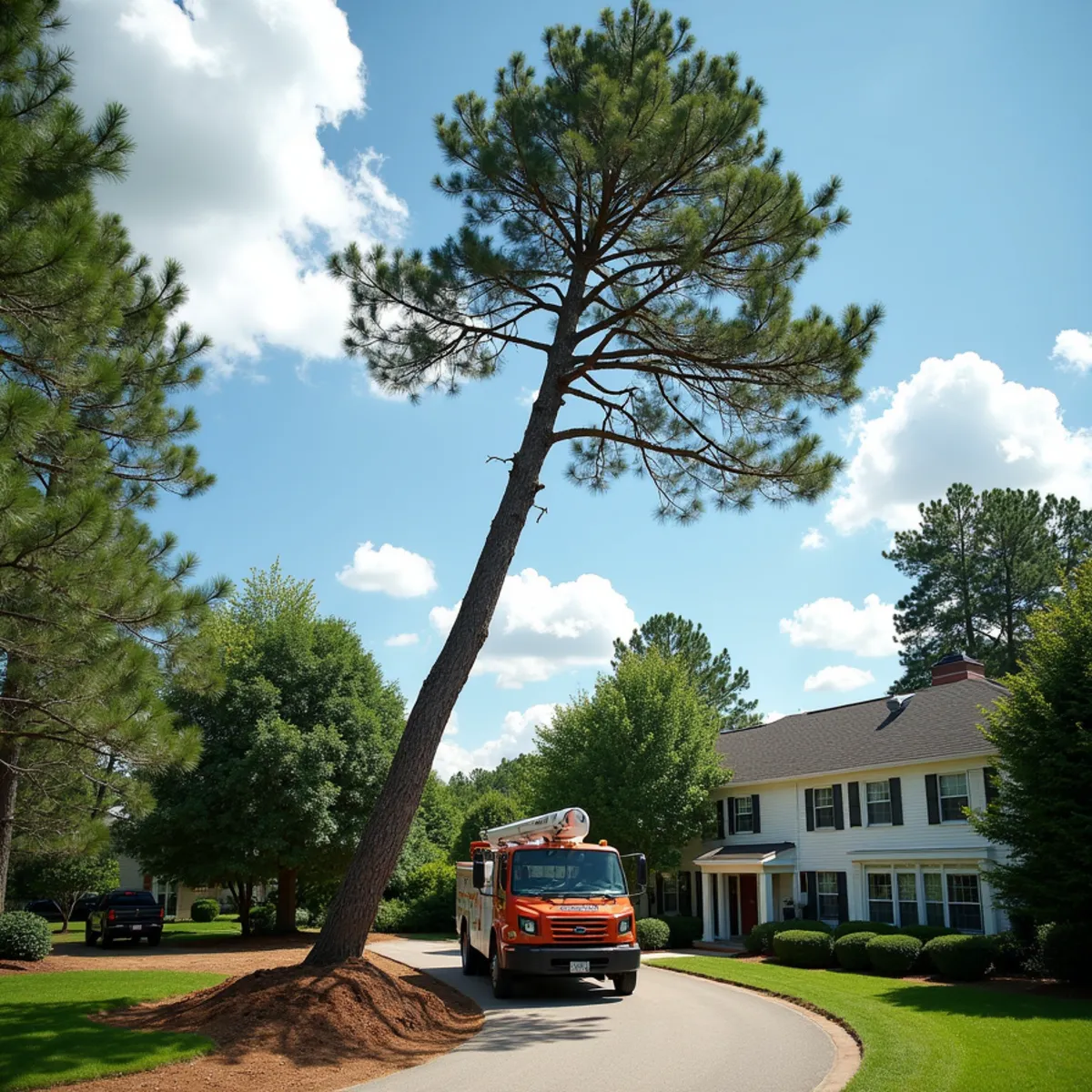
Natural Growth Curve vs. Sudden Structural Root Failure
Loblolly pines (Pinus taeda) and Virginia pines (Pinus virginiana) dominate residential landscapes across Mooresville, Troutman, and Cornelius. Homeowners frequently observe their pines leaning and wonder whether the tree is a ticking time bomb or simply a natural woodland specimen.
The critical distinction lies between phototropism (natural phototropic curvature) and structural root plate failure. Pines growing in dense suburban woodlots naturally curve their trunks over decades as they compete for sunlight. In a naturally curved tree, the trunk bends gracefully, and the upper crown self-corrects to grow vertically toward the sky. The wood grain has reinforced itself with dense compression wood along the underside of the curve.
In contrast, sudden structural lean occurs when a previously vertical pine suddenly tilts at an angle, with the trunk remaining completely straight. If the upper crown leans in parallel with the lower trunk, the tree has not had time to self-correct: the root system is actively failing beneath the soil.
The Anatomy of a Pine Uprooting: Cecil Red Clay Mechanics
Unlike deep-rooted taproot species in sandy coastal soils, mature loblolly pines in the Piedmont develop remarkably shallow, broad root plates. In dense, compacted Cecil clay, more than 85% of a pine's root biomass is concentrated within the upper 18 to 24 inches of soil.
When severe thunderstorm systems dump 3 to 5 inches of rain over Lake Norman, the clay soil liquefies into an unsupportive slurry. Under high wind shear, an 80-foot pine exerts tens of thousands of foot-pounds of rotational torque at its base. If wind gusts push the crown, the tension roots on the windward side are stretched beyond their tensile limits. Once those structural anchor roots snap, the entire root plate lifts like a hinged trapdoor, resulting in rapid, total tree collapse.
Questions About Your Trees?
Speak directly with our local tree team. No automated robots.
How to Inspect the Root Plate: Fissures, Mounds, and Tension Signs
To determine if your leaning pine is an imminent hazard, perform a systematic ground inspection: 1. Locate the Windward Side: Stand opposite the direction the pine is leaning. 2. Inspect Soil Level: Look for a crescent-shaped mound of raised turf or newly exposed red clay. If soil on the side opposite the lean is higher than the surrounding lawn, the root plate has begun lifting. 3. Check for Fresh Fissures: Look for curved cracks in the soil, separated sod, or severed feeder roots popping through the grass. 4. Inspect During Wind Events: Have someone observe the soil at the base while wind gusts hit the canopy. If the ground visibly flexes, breathes, or moves more than a fraction of an inch, the tree's anchoring mechanism is catastrophically compromised. 5. Check Trunk Flare Condition: Look for fungal conks, oozing sap, or sawdust-like frass indicating internal rot at the root collar.
Southern Pine Beetle (SPB) Infestation: The Fatal Weakener
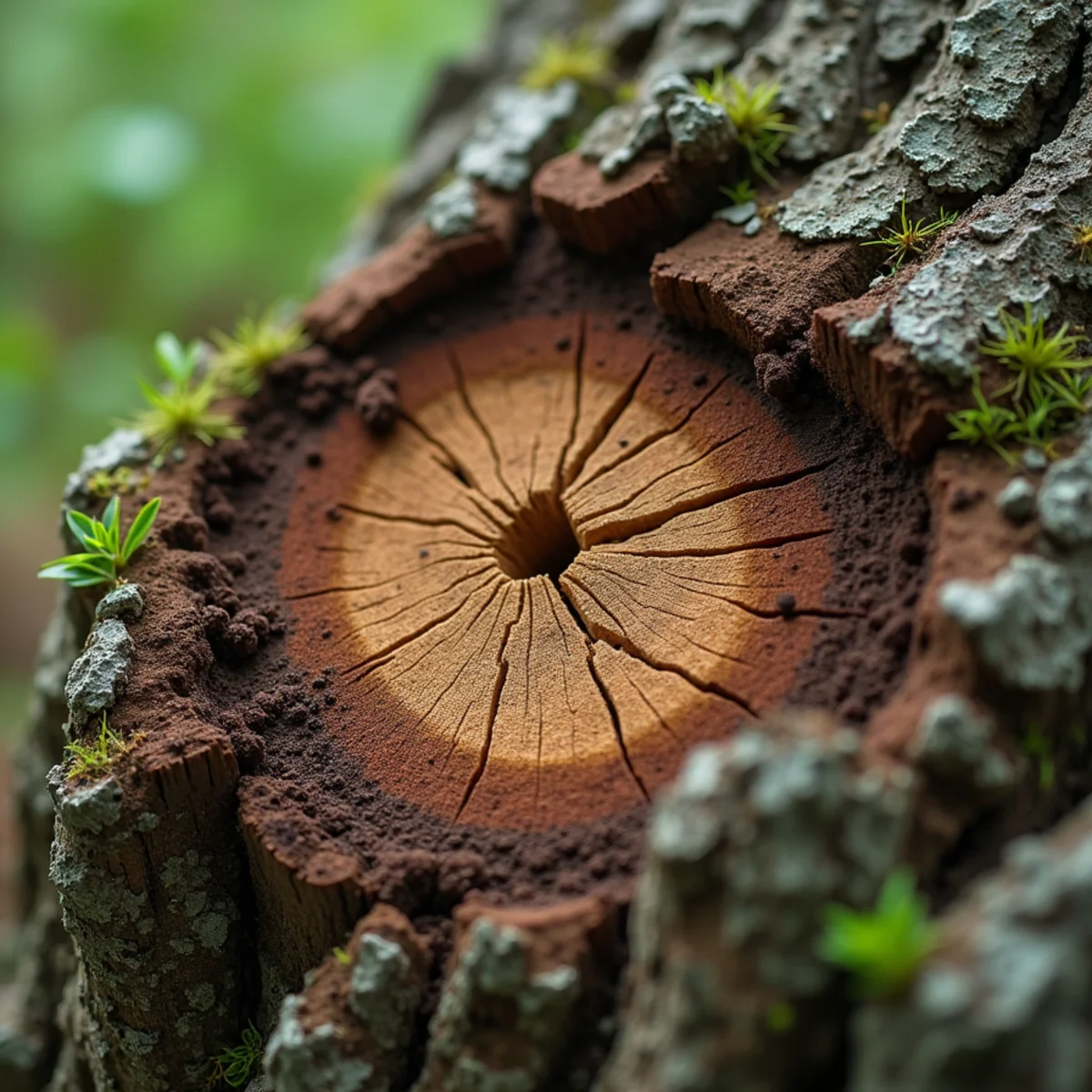
Drought stress and construction root damage frequently invite Southern Pine Beetles (Dendroctonus frontalis) into mature Lake Norman pines. These tiny pests bore through outer bark to feed on the inner cambium, carving S-shaped galleries that disrupt water and nutrient transport while introducing destructive blue stain fungus.
Warning signs of active pine beetle infestation include: • Popcorn Pitch Tubes: Small white or reddish-pink resin nuggets oozing from bark crevices across the trunk. • Red-Brown Frass: Fine, powdery wood dust accumulated in bark crevices and at the base of the tree. • Rapid Needle Discoloration: Canopy needles shifting from healthy deep green to pale yellow, then brick-red within 4 to 8 weeks. • Woodpecker Activity: Woodpeckers aggressively stripping outer bark flakes to feed on developing larvae. Once a pine displays brick-red needles and exit holes, the tree is dead. Brittle pine timber degrades rapidly in Carolina heat, shedding massive tops without warning.
The 5-Point Danger Threshold: When Immediate Removal Is Required
Do not delay scheduling professional removal if your leaning pine meets any of the following danger criteria: 1. The lean exceeds 15 degrees from vertical with a straight trunk. 2. Fresh ground cracking or mounded soil is visible around the root plate. 3. The tree leans directly toward an occupied home, driveway, detached garage, or power line. 4. More than 40% of the upper canopy foliage has turned yellow or brown. 5. The tree trunk sounds hollow when sounded with an arborist mallet. Race City Tree Crew specializes in hazardous pine removals across Mooresville, Troutman, and Cornelius. Using hydraulic cranes and remote-controlled grapple equipment, we lift hazardous pines cleanly out of tight residential yards without dropping a single heavy limb on your lawn. Call (321) 478-0689 for immediate dispatch.
Frequently Asked Questions
Can a leaning mature pine tree be straightened or staked?
No. A mature pine tree exceeding 25 to 30 feet in height cannot be mechanically straightened or cabled back into position. When an adult pine leans due to root failure, the structural anchor roots on the windward side have snapped. Attempting to pull the tree upright causes further root shearing and creates an uncontrollable collapse hazard. Safe removal is the only viable remedy.
What do southern pine beetle holes and pitch tubes look like?
Southern pine beetles bore through pine bark, creating pencil-lead sized holes (1-2 mm). In response, the tree attempts to push them out with sap, forming small white, cream, or reddish-brown resin globules called 'pitch tubes' resembling miniature bits of chewing gum or popcorn scattered along the trunk crevices.
How far does the fall zone of an 80-foot loblolly pine extend?
The fall zone of an 80-foot pine extends in a full 360-degree radius equal to the tree's height plus a 1.5x buffer zone (approximately 120 feet) to account for shattered limbs and bouncing canopy debris upon impact. Any structure, vehicle, or power line within this envelope is at high risk.
Why do pine trees frequently topple days after a heavy rainstorm has passed?
Piedmont red clay acts as a structural sponge. During a rain event, clay becomes fully saturated, losing friction. Over the subsequent 48 to 72 hours, the massive weight of water trapped in the upper needles, combined with shifting gravitational leverage and subterranean root slippage, causes delayed root plate failure on calm, sunny days.
Will homeowners insurance cover removing a leaning pine before it falls?
No. Standard homeowners insurance policies (HO-3) strictly exclude preventive tree removal. Insurance only provides coverage after a tree has fallen and caused direct physical damage to an insured structure like your house, roof, or garage. Homeowners are solely responsible for taking down hazardous standing trees before catastrophic failure occurs.
Related Tree Services & Local Coverage:
Need Tree Service in Mooresville or Lake Norman?
Our local crews are ready 24/7. Get a transparent written price before any work begins.
Click to call instantly • 24 hours a day
Not Urgent? Send a Request
For the fastest help, call (321) 478-0689. Otherwise, send details below and we will contact you.